
How to actually recover your CNS with PEDs and other compounds

In the world of performance enhancement, most attention goes to what boosts output: more reps, more weight, more drive. But training is only half the equation. Recovery, especially central nervous system (CNS) recovery, is where adaptation truly happens. When your CNS is fried, your motivation and performance drops, sleep suffers, coordination lags, and no amount of pre-workout can fix it. So, the question becomes: Can PEDs accelerate CNS recovery as effectively as they boost performance? The answer is yes, but only if you know what to use, and how.
CNS fatigue is a systemic, neurological exhaustion that can result from intense, high-volume or high-intensity training, especially heavy lifting, sprinting, or explosive movements. Symptoms include:
- Irritability and/or low motivation to train;
- Decreased force output or coordination;
- Poor sleep quality or restlessness;
- Brain fog, low mood, or increased anxiety;
- Reduced libido and poor stress tolerance;
Unlike muscle soreness, CNS fatigue is deeper and harder to fix with rest alone, especially for enhanced athletes pushing their limits year-round.
Compounds that can support or accelerate CNS recovery
Let’s break down the PEDs (and other compounds) with similar function that can support or accelerate CNS recovery, backed by both empirical use and some scientific logic:
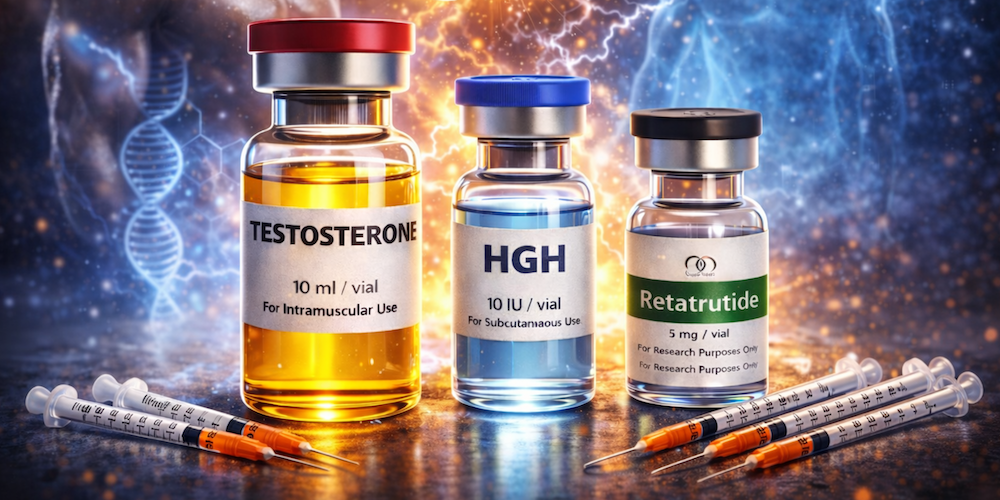
Testosterone (base support)
- Supports dopamine and mood via androgen receptor activation;
- Enhances sleep quality (via increased deep sleep and REM cycles);
- Speeds muscle repair, thus reducing CNS burden;
Low test = low drive. On the flip side, very high doses can cause sleep disruption, anxiety, or overstimulation, so balance and moderation are key.
Best use: as a base compound at moderate doses to support overall recovery.
Growth Hormone (GH)
- Tissue repair (especially soft tissue and connective tissue)
- Sleep architecture (increases slow-wave/deep sleep)
- Neural recovery via IGF-1 and neurogenesis pathways
Many lifters report better sleep quality, joint health, improved mood, and faster bounce-back from taxing sessions when GH is part of their protocol.
Best use: 2–4 IU before bed (low to moderate doses), especially during cutting or injury rehab.
Modafinil (smart recovery tool, if used right)
- Restore mental clarity during CNS fatigue slumps;
- Improve mood, alertness, and decision-making;
- Prevent overreliance on caffeine and stims;
But it doesn’t “fix” fatigue: it overrides it, which can delay true recovery if abused. It’s best used in short bursts post-competition or during critical cognitive tasks.
Best use: 100–200mg, no more than 1–2 times per week during burnout phases.
Melatonin & GABAergics
Though not PEDs in the traditional sense, these support CNS recovery by improving sleep efficiency:
- Melatonin regulates circadian rhythm and enhances deep sleep;
- Phenibut or GABA supplements (used with caution) can reduce anxiety and promote rest;
Chronic sleep debt is a major CNS drain, and restoring deep sleep is often the fastest way to bounce back.
Best use: melatonin (0.3–1mg) pre-bed; GABAergics occasionally to avoid dependence.
Bromantane (CNS recovery + mental drive)
Originally developed in Russia, bromantane is an actoprotector (or syntethic adaptogen) that:
- Enhances CNS recovery;
- Increases dopamine synthesis;
- Reduces mental fatigue without overstimulation;
Users report feeling motivated but calm, even after intense CNS-taxing sessions. It’s often called a “stim that heals.”
Best use: 50–100mg in the morning for 1–2 weeks during heavy training blocks or overreaching.
Low-dose Nandrolone (underestimated for recovery)
- Joint relief and connective tissue support;
- Promotes some calmness and rest;
- Reduces systemic inflammation;
It’s not great for aggression or drive, but ideal in phases focused on recovery, healing, or deloading.
Best use: 100–200mg/week during low-volume phases or rehab periods.
Psychedelics and adaptogens
Though unconventional, microdoses of psilocybin or LSD have been explored for:
- CNS recalibration;
- Reduced rumination and anxiety;
- Improved neuroplasticity;
Likewise, adaptogens like Rhodiola Rosea, Ashwagandha, and Lion’s Mane support the HPA axis, improve resilience, and enhance CNS recovery indirectly.
What doesn’t work (or backfires):
- Stimulants (Caffeine, Ephedrine, DMAA): mask fatigue and tax the CNS further;
- Excessive TRT levels: may worsen sleep and CNS stimulation;
- Overreliance on GH or insulin: can cause sleep disruption and downstream fatigue
In conclusion, you can train harder, longer, and smarter with PEDs, but if you don’t recover, you won’t grow. CNS fatigue is real, and ignoring it leads to plateaus, mental burnout, and even injury. PEDs like GH, low-dose testosterone, bromantane, and nootropics can help you bounce back faster, if used responsibly and combined with deep sleep, proper nutrition, and programmed rest, that is. Train hard. Recover harder. That’s how the best do it.