Your resting heart rate matters way more than you think

Most enhanced lifters track the obvious things: strength, bodyweight, bodyfat percentage, pumps, blood pressure, and just maybe bloodwork and hematocrit. Resting heart rate rarely gets attention unless it becomes extreme. As long as you’re not out of breath walking up stairs, it feels irrelevant. Well, it isn’t.
Resting heart rate is one of the clearest, simplest ways that your body manifests baseline stress load. Not gym stress, not acute effort during a session. Just baseline tone. And, on cycle, that baseline often shifts long before performance does.
When anabolic load increases, sympathetic activity tends to rise with it. Output goes up, drive increases and work capacity improves. That same shift, however, keeps the nervous system slightly “on” even when you’re supposed to be recovering. The body may look anabolic, but the system is subtly accelerated. A small increase in resting heart rate (even just 5–10 beats per minute above your normal baseline) is often the first sign.
The here issue isn’t that your heart is “working too hard” in an extreme sense. It’s that your body is trying to grow in an environment of resistance and sub-optimal recovery. Higher baseline sympathetic tone can affect:
- sleep depth and REM quality;
- heart rate variability;
- digestion efficiency;
- recovery signaling;
- perceived stress tolerance
You can still train hard and make some progress, but the margin narrows because your recovery becomes conditional. You start to feel like you need more food, more rest, more management just to maintain what used to happen naturally. This is where people misinterpret what’s really going on. They assume the cycle is working because strength is climbing. In reality, the system may already be compensating as it can’t recover as it used to.
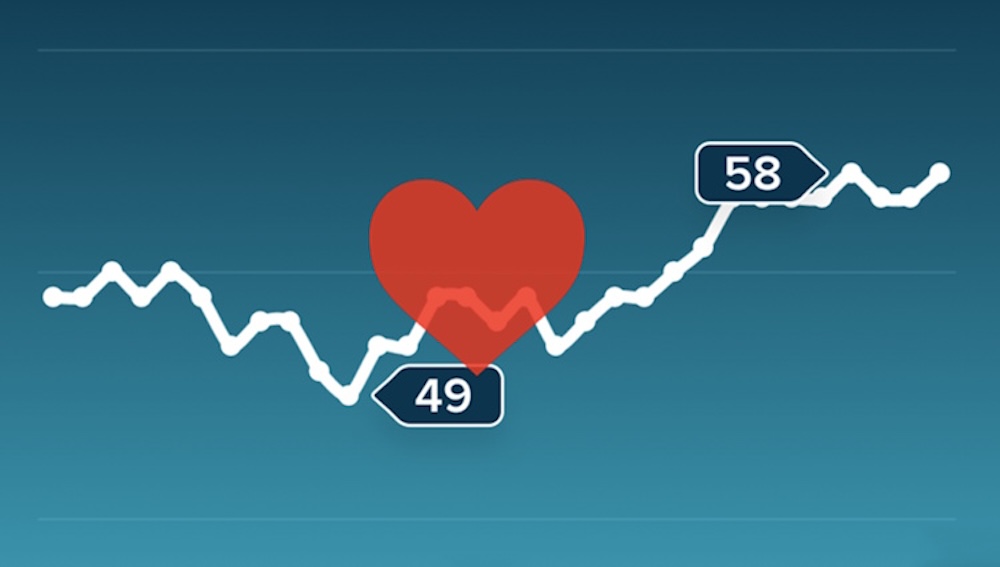
Resting heart rate becomes especially relevant when it creeps up gradually. The change is subtle enough that you normalize it. Waking up at 68 bpm instead of 58 feels insignificant at first. But over weeks, that elevated baseline compounds. The body now spends 24 hours a day slightly accelerated. Over time, that impacts:
- blood pressure stability;
- vascular stiffness;
- recovery capacity;
- mood regulation;
- long-term cardiovascular strain
None of this is dramatic in isolation, nor does it have significant detrimental implications, and that’s exactly why it’s often missed.
Another layer is perception. Elevated baseline arousal can feel like productivity. You feel alert, motivated, ready to move and do stuff. Most likely, that readiness comes from increased systemic stress and isn’t the same as adaptability. When sympathetic tone stays elevated for too long, parasympathetic recovery never fully takes over.
You fall asleep, but not as deeply as you used to. You may even rest, but don’t ever fully reset. Over time, this can manifest as:
- lighter sleep despite exhaustion;
- subtle anxiety or irritability;
- reduced appetite stability;
- slower heart rate recovery between sets;
- a feeling of being “wired but tired”
All of this is rarely attributed to resting heart rate, yet the correlation is consistent both on literature and medical practice.
The thing is, most enhanced lifters often assume cardiovascular risk is just about hematocrit or lipid panels. Of course, those matter a lot and should still be monitored, but resting heart rate reflects something more immediate: how hard your system is idling at that instant.
An engine that revs higher at idle wears differently (and probably faster) than one that runs calm. The same principle applies here: a constantly elevated baseline means the body never fully downshifts. This doesn’t mean cycles are inherently, 100% of the times, unsafe. It means they alter baseline physiology sometimes so lightly and in such ways that are easy to ignore because they don’t feel dramatic. The takeaway isn’t to obsess over a single metric. It’s to understand what it represents as a whole.
Do pay attention: if your resting heart rate is climbing cycle after cycle, that’s not random, it’s feedback. It may signal accumulated sympathetic load, reduced aerobic conditioning, increased blood viscosity, all of this at once, or simply that the current protocol is pushing the system harder than you think.
Performance enhancement isn’t just about what happens under the bar. It’s about what happens 24/7, even when you’re lying still. If your body can’t truly downshift, it can’t fully recover. And if you can’t recover, progress (and your health) will pay the price.