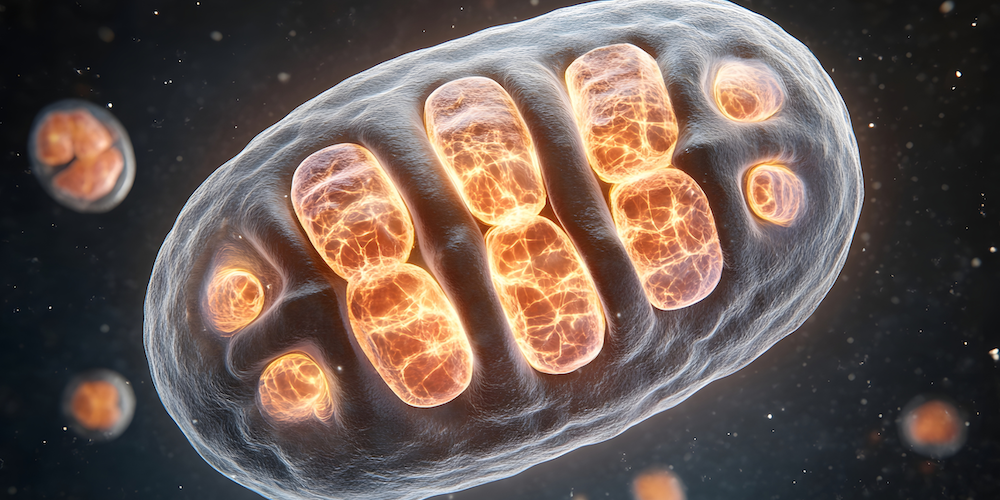

The Mitochondria era

For decades, performance and health discussions revolved around hormones, calories, and training intensity. Today, the focus is shifting deeper, down to the level where energy is actually created. Mitochondria are the structures inside cells responsible for producing ATP, the energy currency that powers muscle contraction, brain function, recovery, immune defense, and fat metabolism. When mitochondria underperform, everything else follows. Strength drops, fat loss stalls, recovery slows, and aging accelerates.
Modern Life Is a Mitochondrial Stress Test
Chronic stress, poor sleep, sedentary behavior, ultra-processed food, environmental toxins, and repeated inflammatory insults all damage mitochondrial function. Even individuals who train hard and eat well often suffer from silent mitochondrial inefficiency. This shows up as fatigue despite normal bloodwork, poor endurance, brain fog, stubborn fat, low resilience to stress, and slow recovery from illness or injury. Traditional approaches rarely address this root problem.
Why Hormones Alone Are No Longer Enough
Hormones like testosterone, growth hormone, and thyroid hormones do not create energy on their own. They regulate how energy is used, but mitochondria determine how much energy is actually available. You can optimize hormones perfectly and still feel flat if mitochondrial output is low. This is why some enhanced athletes feel worse over time despite higher hormone levels. The system has fuel, but the engines are failing.
The Rise of Mitochondrial Targeted Compounds
Recent research has shifted toward compounds that directly improve mitochondrial efficiency, biogenesis, and resilience. Peptides and signaling molecules that enhance oxidative phosphorylation, fat oxidation, and cellular stress resistance are gaining attention because they address energy production at its source. The most obvious examples are MOTS-c, SS-31 and NAD+.
Why Fat Loss, Endurance, and Recovery All Converge Here
Mitochondria sit at the intersection of fat metabolism, endurance capacity, and recovery. Efficient mitochondria burn fat more readily, produce less oxidative waste, and recover faster after stress. Poor mitochondrial health leads to reliance on glucose, rapid fatigue, and prolonged inflammation. This explains why improving mitochondrial function often leads to simultaneous improvements in body composition, stamina, and overall well-being without extreme dieting or stimulant use.
Longevity Is Ultimately an Energy Problem
Aging is closely tied to declining mitochondrial number and function. As mitochondria lose efficiency, cells accumulate damage faster than they can repair it. Supporting mitochondrial health slows this process by improving cellular repair, reducing oxidative stress, and maintaining metabolic flexibility. Longevity is not about avoiding effort. It is about maintaining the ability to produce energy efficiently over decades.
Why This Shift Is Just Beginning
The mitochondria era represents a move away from brute-force optimization toward intelligent bio-regulation. Instead of overriding systems, the goal is to restore the body’s ability to generate energy, adapt to stress, and recover naturally. As research continues to uncover how mitochondrial signaling governs health, performance, and aging, this approach will only expand. Energy production is not just another metric. It is the foundation everything else depends on.
Performance, fat loss, recovery, cognition, and longevity all converge at the same place: mitochondrial function. The future of optimization will not be defined by higher doses or harsher interventions, but by how well the body produces and manages energy. The mitochondria era is not a trend. It is a correction, and it is reshaping how people think about health from the inside out.