
When Testosterone becomes the problem

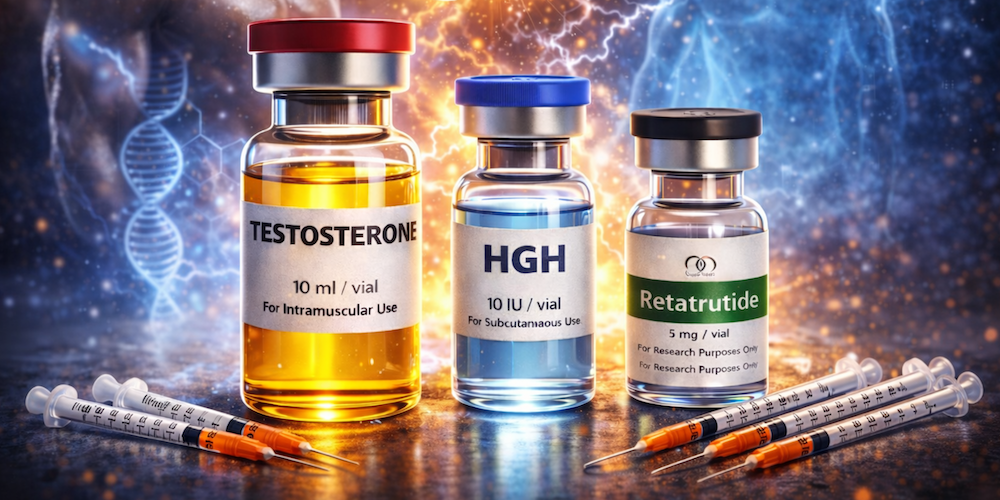
Testosterone is generally treated as the safest variable in performance enhancement. If a cycle feels off, people blame everything except the test: estrogen, prolactin, sleep, stress, diet, training volume and the list goes on. The assumption is very simple: testosterone is the foundation, so increasing it won’t be an issue and will only bring more benefits, right? Well, not always.
When High or Prolonged Doses Turn Testosterone into a Stressor
At higher or prolonged doses, testosterone stops acting like a neutral base and starts behaving like a stressor. Not an obvious one; a subtle but cumulative one. The kind that doesn’t ruin bloodwork overnight, but slowly degrades how the whole system feels and responds. The problem isn’t testosterone itself. As always, context matters a lot.
Recovery: Amplified Output, Lagging Adaptation
One of the first things that quietly worsens is recovery. High testosterone not only increases training output (strength, drive, work capacity, etc.), but also raises baseline stress. Sympathetic systems stay elevated, resting heart rate (and blood pressure) tends to creep up, sleep becomes lighter and you don’t feel as rested as you used to when waking up. You feel capable of doing more, but tissue-level recovery just doesn’t scale with that capability.
Training looks productive, but adaptation is slowly lagging behind. This is where many lifters get confused: they’re lifting heavier, training harder, and still see minimal to no progress. The instinct is to add another compound, up the doses or increase calories, when the real issue is that testosterone is amplifying output faster than recovery can keep up.
Body Composition: Harder to Control
Body composition will probably be the next thing to suffer: higher testosterone increases conversion into estrogen, aldosterone activity, and overall fluid dynamics. At moderate doses, this is usually manageable. As doses go up or duration gets longer, water retention becomes less predictable, fat distribution changes and the line between fullness and spillover, much like your physique, gets blurred. You don’t necessarily look worse, but you stop looking sharper as effort increases. Conditioning requires more precision. Diet tolerance shrinks. Small mistakes show up faster. The physique becomes harder to control, not because testosterone stopped working, but because it’s now influencing too many systems and interacting with too much with your body all at once.
Mental Effects: From Edge to Noise
Mentally, the shift is even subtler: high testosterone doesn’t always increase drive, sometimes it just creates noise. Restlessness replaces focus, confidence turns into irritability and motivation becomes inconsistent. You still want to train, but that “on-cycle” edge feels blunt. Nothing feels “off”, yet nothing feels sharp and responsive. This is where people start blaming estrogen again. They will abuse AIs, chase dryness, diet themselves into oblivion, and feel even worse in the end. The real issue isn’t estrogen being high: it’s testosterone pushing the nervous system into a state that no longer supports clean output and growth.
Real-World Signs of Too Much Testosterone
In the real-world, this is how “too-much-testosterone-as-the-problem” tends to show up:
- strength and work capacity increase, but progress stops or slows down;
- sleep quality degrades despite fatigue and feeling tired all the time;
- appetite becomes less reliable;
- water retention and fat distribution become harder to manage;
- mood shifts toward irritability or restlessness;
- recovery feels “almost enough”, but never fully there.
None of this looks dramatic on lab results, that’s why it’s so often missed. There’s also a timing component most lifters ignore: testosterone feels forgiving early in cycles. Over time, as exposure accumulates, the same doses produce different effects. What once felt great starts to feel too heavy to bear. Not toxic, just inefficient.
This is why people with more experience often report better cycles on less testosterone instead of more. Lower test reduces background noise, lowers general stress and allows other compounds (also the effects training itself) to express more clearly. The whole thing becomes easier to read and manage.
The takeaway here isn’t that testosterone is just bad or should be minimized at all costs. It’s that treating it as a harmless base ignores how powerful it really is: testosterone sets the tone for training, recovery, stress, mood, and body composition. When that tone shifts too far in one direction, everything tends to suffer. If a cycle feels chaotic, flat, or harder and harder to manage, the problem isn’t always the compounds you added. Sometimes it’s what you assumed was safe and just couldn’t be the issue.
In the end, more testosterone doesn’t always mean more progress. Sometimes it just means more noise and interference.