To say that addiction comes down to a lack of discipline is incredibly simplistic and unfair. Addiction stems from a dysfunction in the brain’s reward system, particularly involving dopamine signaling. Substances like alcohol, nicotine, and highly processed foods overstimulate dopamine pathways, leading to repeated use, reduced sensitivity, and eventually compulsive behavior. Over time, the brain […]Read More

Tags : GLP-1
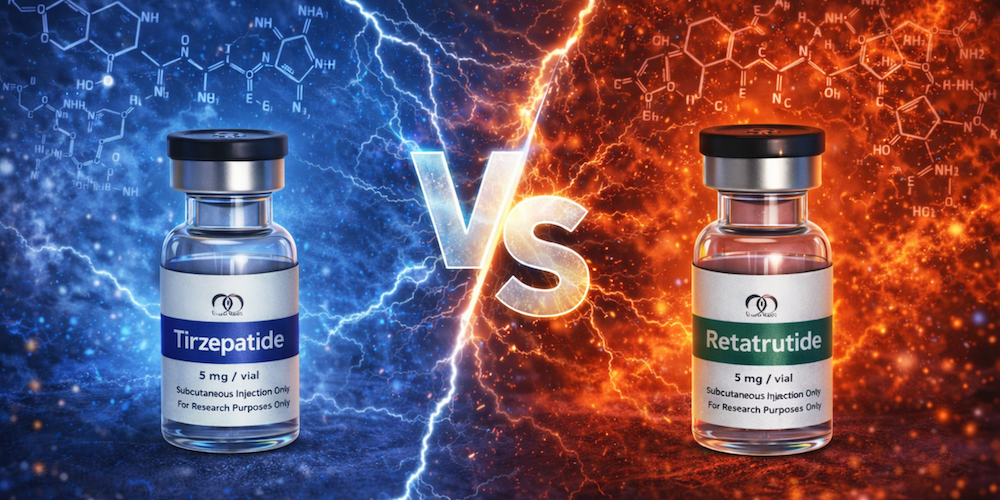
Retatrutide and Tirzepatide represent a major evolution in metabolic pharmacology. Both are synthetic peptide agonists designed to treat obesity and type 2 diabetes by targeting incretin biology, but they differ significantly in receptor profile, metabolic impact, and physiological consequences. Understanding their mechanistic differences is essential for evaluating their effects on fat loss, energy expenditure, glucose […]Read More
Before semaglutide, tirzepatide, and retatrutide took the world by storm, there was Liraglutide, the first GLP-1 receptor agonist to demonstrate that manipulating incretin hormones could dramatically improve weight loss, glucose control, and metabolic function. Marketed under the brand names Victoza and Saxenda, liraglutide paved the way for the next generation of GLP-based drugs that are […]Read More
GLP-1 receptor agonists, once known only as diabetes medications, have transformed into some of the most effective drugs for obesity and metabolic health. Compounds like Semaglutide, Tirzepatide, and the newer triple agonist Retatrutide have shown unmatched benefits in fat loss, insulin sensitivity, and cardiovascular protection. Emerging evidence now suggests that these drugs may also carry […]Read More
Most people assume muscle growth is limited by training volume and intensity, recovery, or drug use: if progress slows, the standard solution is usually to try to train harder, add more volume, or add something to the stack. But for many lifters (especially bigger individuals) the real bottleneck becomes far less exciting: food and appetite. […]Read More